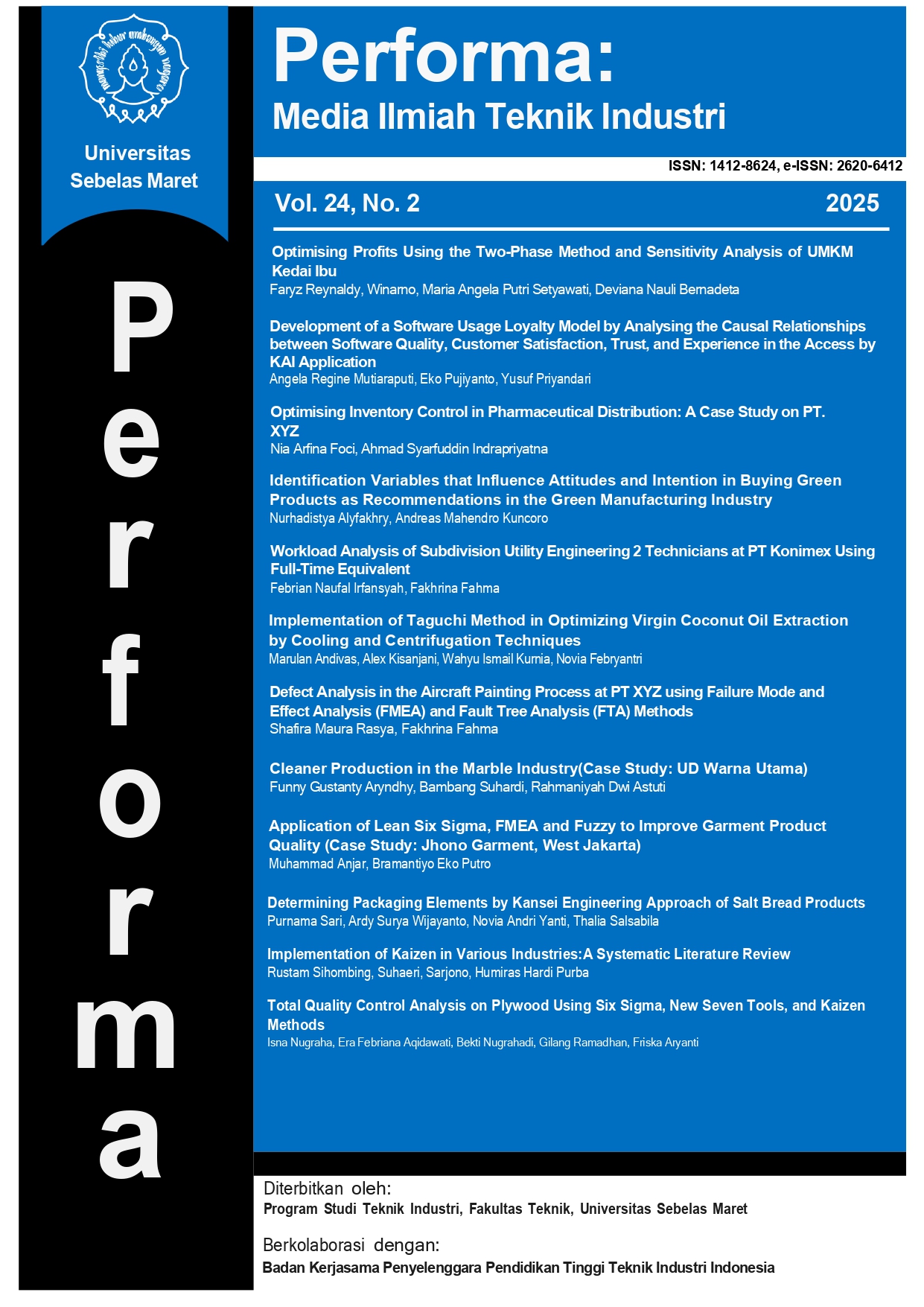
Application of Lean Six Sigma, FMEA and Fuzzy to Improve Garment Product Quality (Case Study: Jhono Garment, West Jakarta)
DOI:
https://doi.org/10.20961/performa.v24i2.2744Keywords:
Fuzzy, FMEA, Lean Six-Sigma, Quality EngineeringAbstract
Jhono Garment produces various kinds of clothing including t-shirts, polo, nightwear, children's clothes, sportswear, and others with a made by order system. The problem that is often experienced by this Garment is that there are still defects or defects in the product in the production process that cause cost and time losses. This study aims to determine the level of defects and sigma values of products produced by Jhono Garment, find out what waste factors must be eliminated first, find out the factors that cause product defects in Jhono Garment, provide recommendations for improvements to the causes of defects in Jhono Garment products. Data collection in this study is using primary and secondary data, namely production data from November 2022 to April 2023 and production process data. The methods used are lean six sigma, FMEA and fuzzy. The results showed that the sigma value of the Jhono Garment product is a T-shirt clothing product with a sigma value of 4.006. The waste factor that must be eliminated first is waste defects. The factors causing defects in Jhono Garment consist of 5 factors, namely humans, machines, materials, methods, and the environment. The recommendation for improvement of waste defects is to make folding molds in the product folding process.
References
Admirani, I. (2018). Penerapan Metode Fuzzy Time Series Untuk Prediksi Laba Pada Perusahaan. JUPITER (Jurnal Penelitian Ilmu Dan Teknik Komputer), 10(1), Article 1. https://doi.org/10.5281/zenodo.3408507
Andriani, D., Novianti, V., Utami, W., & Prastyo, Y. (2019). Pengendalian Kualitas Pie Susu sebagai Upaya Sustainabilitas IKM Mamin Berbasis Kearifan Lokal dengan SQC Method. 6.
Basuki, D. E., Cahyo, W. N., Handayani, D., Apriani, R. A., & Mukarim, R. N. (2023). Combined Waste Assessment Model and Fuzzy-FMEA in Lean Six Sigma for Generating Waste Reduction Strategy: A Proposed Model. Jurnal Teknik Industri: Jurnal Keilmuan Dan Aplikasi Teknik Industri, 25(2), Article 2. https://doi.org/10.9744/jti.25.2.153-168
DataIndustri Research. (2023, April 14). Pertumbuhan Industri Tekstil dan Pakaian Jadi, 2011—2023. https://www.dataindustri.com/produk/tren-data-pertumbuhan-industri-tekstil-dan-pakaian-jadi/
Ellianto, M. S. D., Santoso, P. B., & Sonief, A. A. (2017). Usulan Penerapan Lean Six Sigma, FMEA dan Fuzzy untuk Meningkatkan Kualitas Produk Botol Sabun Cair. JEMIS (Journal of Engineering & Management in Industrial System). https://doi.org/10.21776/ub.jemis.2015.003.01.5
Fibriani, L., Garside, A. K., & Amallynda, I. (2024). Lean Six Sigma Approach to Improve the Production Process in the Garment Company: A Case Study. JEMIS (Journal of Engineering & Management in Industrial System). https://doi.org/10.21776/ub.jemis.2023.011.02.7
Hadijah, I. (2014). Upaya Peningkatan Export Drive Industri Fashion di Era Globalisasi. Teknologi dan Kejuruan: Jurnal teknologi, Kejuruan dan Pengajarannya, 37(1), Article 1. https://doi.org/10.17977/tk.v37i1.4111
Haq, I. S., Darma, A. Y., & Batubara, R. A. (2021). Penggunaan Metode Failure Mode and Effect Analysis (FMEA) dalam Identifikasi Kegagalan Mesin untuk Dasar Penentuan Tindakan Perawatan di Pabrik Kelapa Sawit Libo. JURNAL VOKASI TEKNOLOGI INDUSTRI (JVTI), 3(1), Article 1. http://journal.itsb.ac.id/index.php/JVTI/article/view/209
Haryono, M. F. Y., & Sumiati, S. (2023). Analisis Pengendalian Kualitas Produk Paving Block Menggunakan Metode Statistical Quality Control (SQC) Dan Failure Mode Effect Analysis (FMEA) Di PT. Duta Beton Mandiri, Pasuruan. Jurnal Penelitian Rumpun Ilmu Teknik, 2(3), 45–65. https://doi.org/10.55606/juprit.v2i3.1992
Hasibuan, H. S., & Desrianty, A. (2022). Analisis Kualitas Produk dengan Menggunakan Metode Lean Six Sigma untuk Mengurangi Tingkat Kecacatan pada CV New Bandung Mulia Konveksi. E-Proceeding FTI. https://eproceeding.itenas.ac.id/index.php/fti/article/view/1741
Hermawan, F. R., & Safariyani, E. (2024). Pengendalian Kualitas dalam Perencanaan Produksi Menggunakan Alat Bantu Seven Tools di Perusahaan Konstruksi. Industrika : Jurnal Ilmiah Teknik Industri, 8(4), 897–908. https://doi.org/10.37090/indstrk.v8i4.1499
Ikhsan, M. N., & Yuniati, Y. (2022). Usulan Peningkatan Kualitas Proses dengan Menggunakan Metode Six Sigma di Konveksi Sura Cimahi. FTI. https://eproceeding.itenas.ac.id/index.php/fti/article/view/1750
Jasmine, I. A., Salma, S. A., & Susanto, H. (2024). Jersey Production Quality Control Using Six Sigma and FMEA Methods To Minimize Product Defects. Jurnal Teknik Industri: Jurnal Hasil Penelitian Dan Karya Ilmiah Dalam Bidang Teknik Industri, 10(2), .https://doi.org/10.24014/jti.v10i2.30774
Kemendag. (2023, March 27). Konferensi Pers Mendag Bersama Menkop UKM Terkait Larangan Impor Pakaian Bekas—Kementerian Perdagangan Republik Indonesia. https://www.kemendag.go.id/berita/foto/konferensi-pers-mendag-bersama-menkop-ukm-terkait-larangan-impor-pakaian-bekas
Kurnia, H., Tumanggor, O. S. P., & Jaqin, C. (2021). Lean Six Sigma: Literature Review and Implementation for Textile and Textile Product (TTP) Industries. Proceeding Mercu Buana Conference on Industrial Engineering, 3, 1–10. https://publikasi.mercubuana.ac.id/index.php/mbcie/article/view/20294
Mustikarani, T. D., & Irwansyah, I. (2019). Pemanfaatan Teknologi Informasi dan Komunikasi dalam Industri Fashion Indonesia. Warta Ikatan Sarjana Komunikasi Indonesia, 2(01), Article 01. https://doi.org/10.25008/wartaiski.v2i01.23
Nasution, N., & Azhar, I. N. (2020). Membangun Mental Entrepreuner Guna Persaingan Bisnis di Bidang Konveksi Pada Pelaku Usaha di Konveksi Angkola Jaya Tapanuli Selatan. Jurnal Pengabdian Masyarakat Aufa (JPMA), 2(3), Article 3.
Nugraha, E., Sari, R. M., Kurniawan, A., & Guslan, D. (2024). Analysis and implementation of the dmaic six sigma method as an effort to control weaving fabric production defects: Industrial textile case study. Edelweiss Applied Science and Technology, 8(5). https://doi.org/10.55214/25768484.v8i5.1734
Putri, T. A., & Alfareza, M. N. (2019). Pengendalian Kualitas Produk Kaos Menggunakan Metode Six Sigma (Studi Kasus pada Konveksi X di Yogyakarta).
Shega, H. N. H., Rahmawati, R., & Yasin, H. (2012). Penentuan Faktor Prioritas Mahasiswa dalam Memilih Telepon Seluler Merk Blackberry dengan Fuzzy AHP. Jurnal Gaussian, 1(1). https://doi.org/10.14710/j.gauss.1.1.73-82
Wahyudi, E. (2023, March 14). Dampak Thrifting Baju Bekas Impor, Rugikan Negara Hingga Jadi Sampah. fortuneidn.com. https://www.fortuneidn.com/news/eko-wahyudi/dampak-thrifting-baju-bekas-impor-rugikan-negara-hingga-jadi-sampah
Widianti, T., & Firdaus, H. (2016). Pengujian Suhu Lemari Es dengan Metode Terintegrasi Fuzzy Failure Mode And Effect Analysis (Fuzzy-FMEA). Jurnal Standardisasi, 18(1), 9–23. https://doi.org/10.31153/js.v18i1.693
Downloads
Published
Issue
Section
License
Copyright (c) 2025 Performa: Media Ilmiah Teknik Industri

This work is licensed under a Creative Commons Attribution-NonCommercial-ShareAlike 4.0 International License.